
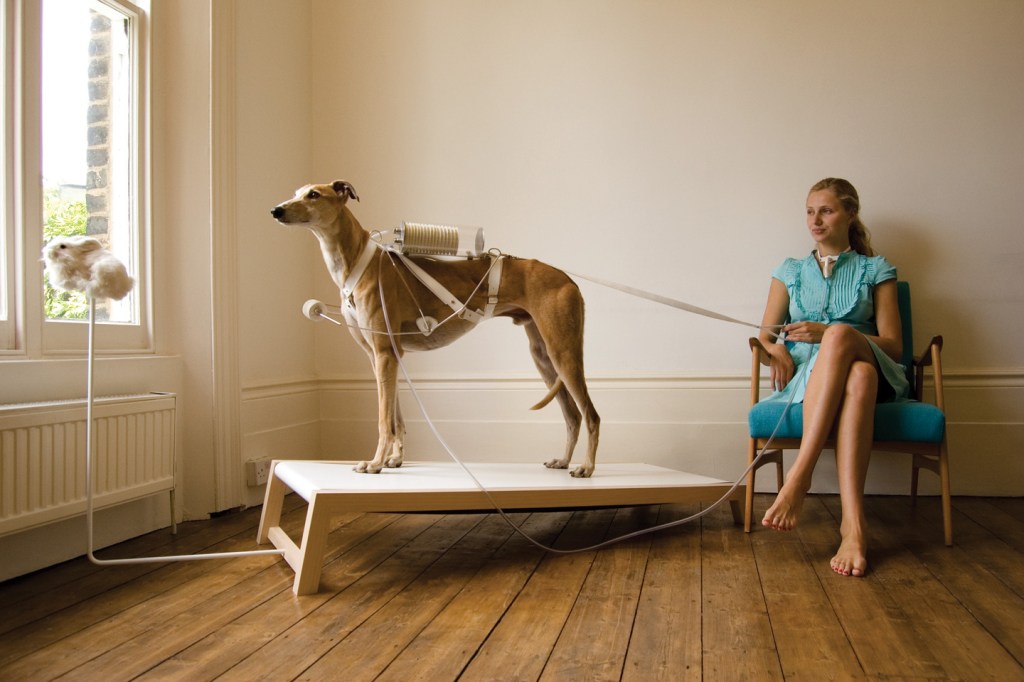
In 2022, the worldwide population of cats and dogs was of over half a billion. The number of registered ornamental birds in Italy alone was 12.88 million, which corresponded to an average of 22% households owning an ornamental bird. US citizens were owners of 3.5 million horses and 17 million exotic animals, almost 1 in 10 households. The population of pets in Australia surpassed the figures of human population (29 million vs. 25 million).
It is estimated that by the year 2027 the pet care industry will reach a net worth of 358.2 billion USD, veterinarian expenses excluded.
With a rise in popularity of pet keeping, where Millennials make up to 33% of the total number of pet owners, it is worthy investigating what is contributing to the shaping of this upward-looking trend, and who’s benefiting from it.
Are animals gaining more rights, or is pet ownership becoming the last harbour of oppression that humans can profit from, while movements for human liberation are concurrently progressing?
In this analysis of the present state, we’ll trace an overview of the existing relationship of power and care between humans and pets; propose a distinction between ownership and guardianship; explore several scenarios for ethical cohabitation of humans and animals, looking into whether a future, where the dignity and agency of both groups are respected, is still possible; advocate for principles of care where the conditions precedent to a state of codependency cannot be restored.
However, before we delve into the specifics of the future of pet ownership, it’s crucial to do a roundup of the historical rapports between animals and human in Capitalist societies, and understand how we came to the current setup.
Domestication
Ever since pre-history, there are records of humans and animals living together.
When humans lived in hunters and gatherers societies, they were in direct competition for the control of food resources and territory.
As humans developed a sense of creating tools to simplify tasks that demanded mental and physical labour, they started engineering ways through which they could outsource labour to other living beings. Working relationships are not a novelty among animals, and there are several examples of mutually beneficial collaboration in nature.
Rapports between humans and other animals, on the other hand, were by design never modelled on an intent of collaboration. Even advantageous relationships such as those between humans and honeyguides end up damaging other species, such as bees.
Humans obtained animal support through coercive means, isolating animals in captivity away from their similars, subtracting the food, water and comfort necessary for survival, bending the animals’ natural instincts to docility, and dispensing life essentials just as a reward to submission.
Animals didn’t get any gain in return for their submissions. Food and shelter shall not be considered a benefit, where these are the byproduct of intentional withholding and behavioural modification by the hand of masters, and where the specimen born out of captivity would have been able to procure these themselves.
In spite of this, domestication has produced three main types of relationships with animals (from these types, we are intentionally excluding relationships that are universally recognized as abusive, such as animals used in fight pits, exploited for sexual intercourse, etc.):
- animals bred for work (cattle, entertainment animals, research cavies, etc.)
- pets
- service and emotional support animals.
Work animals are animals whose full life cycle and personhood is preserved to guarantee the fulfilment of a specific human need. Animal rights activists have focused their action primarily on this group. They have advocated to put an end, among others, to slaughtering, dairy and eggs production, zoos, circuses, and employment of animals in scientific experimentation.
In these sectors, the power dynamics are visibly unbalanced. Animals are exploited with no benefit to their own, and if anything, their right to continue to exist is threatened at the very same moment in which the human need ceases to be, and the costs for keeping the animals alive are no longer justified by the logics of profit.
That of service is a type of relationship that activists only recently have started interrogating themselves on.
In these relationships, animals such as dogs and horses are either bred to obtain specific traits, or often rescued from animal shelters, and they are trained to perform a set of tasks and adopted. They thus escape a destiny of slaughter and are guaranteed food and shelter, yet, their life is spared just in virtue of their ability to perform a service, that could equally be provided and compensated for by humans. In addition to this, stats for categories such as guide dogs indicate that only 50 to 60% of all dogs that qualify for training (most often Labrador, Golden Retriever, German Shepherd and Standard Poodles) are actually eventually eligible to work with a vision-impaired person.
Our love and respect for animals is rarely ever unconditional.
Emotional support animals are in between service animals and pets. While they’re not trained to perform a certain set of tasks, they have a medically certified positive impact on the owner, providing a source of distraction in situation of emotional distress.
As such, very much like their service animals fellows, they enjoy some special privileges, such as being able to enter most building on the leash rather than being tied outside, and they can board on planes, rather than crossing country borders caged, in a compartment, squeezed among luggages.
The remaining category is that of pets. We will dwell on this category in depth, as this is currently the human-animals relationship that is guaranteed the highest form of protection, and where abuse most cunningly hides.
Overlaps with slavery
Pets have no other reason nor cause for existence other than human engineering.
As the offspring of breeding practices, conducted under the surveillance and fancy of humans, these animals belong to a category that is ontologically incapacitated to survive in the wild.
Pets became popular following the second Industrial Revolution, when the middle-upper class started accumulating disposable income, that could be invested in commodities which would showcase the owner’s social status.
During the Victorian era, animals such as dogs, cats, parakeets, but also tigers, leopards and hares were domesticated in the modern sense for the first time, without the goal of executing any work, other than providing companionship.
In the early days of pet ownership, research on animals’ behaviour was a nascent space, which hints to the fact that the primary criterion adoption was not necessarily a tracked inclination of certain species to enjoy (and be able to reciprocate) human companionship, but rather a fetishization of animals as accessories.
Once labour could be carried out by machines instead of living beings, and richness was no longer being displayed in the form of land enclosures, social status had to be exhibited by the middle class within the domestic walls. That is the same time in which pet ownership raised in popularity.
Owners had no reason to keep a dog or a cat within their home, and treat it like a family member (going as far as publicly mourning their loss) if not to present an availability of resources that allowed them to cater for eccentric whims, and point to the moral superiority that made them capable of loving a living being lesser than human unconditionally -that is, for the first time, without expecting any labour nor favour in return.
The sophisticated social engineering of this phenomenon strikes us even harder, if we remember that, at the same time, those same representatives of the middle-upper class were keeping slaves to maintain their lifestyle, through the exploitation of unpaid labour and violation of fundamental human rights.
Pet ownership in the Nineteenth and Twentieth century shall be observed from an intersectional angle, as in these centuries pets (especially dogs) were no longer being bred to preserve physical qualities that made them apt to perform work, but because of an obsession with preserving the purity of the breed. Illustrious is the example of the German Shepherd, a bred engineered to portray Prussian supremacy, and that changed name to Alsatian between the end of WWI and 1977 to avoid associations with German imperialism.
Remarkably, the abusers’ preferred way to outwardly signify a detachment from the rest of the population and keep less wealthy fringes in check has always been to treat subjugated humans like work animals, and conversely, pets like the most precious of humans. It is not surprising that chronologically, the birth of the animal rights movement coincided with the suffragettes’ fights for the emancipation of women.
As an example of intentional bestialization of humans, prisoners in concentration camps during WWII were stripped of symbols of their on individuality. Their names were obliterated, and they were instead recognized through an impersonal series of numbers impressed on their skin, akin to the practice of cattle marking.
Their hair was cut, their belongings sequestered, their clothes replaced with uniforms; psychological safety was eroded not only through blatant abuses, but also through the negation of privacy and comfort.
While food and shelter were guaranteed, the quality was purposely made so grimy that one’s dignity would be offended.
Conversely, to this day, some pet keepers dial heavily on the side of anthropomorphism to correct what are perceived as moral depravities in the cohabitation with pets.
While until a couple of decades ago a good pet keeper was considered one that could feed their pet once a day and bring them out for a walk, nowadays the animal rights movement (paired together with Capitalism and globalization) have reached new levels of sophistication.
Pet food comes in a variety of flavours and textures; recipes not only fulfil the nutritional needs of the animal, but emulate the lifestyle of the owner.
Pets can now be put on a vegetarian or vegan diet; their regime can be adjusted to address hormonal imbalances following sterilization; there are edible treats on the market that pose a solution to animals’ bad breath.
There is a profitable industry occupied with pets’ clothing, marketed as protecting and insulating animals’ fur, and selling because of its aesthetic pleasantness. Designers such as Anthony Rubio run profitable luxury businesses selling garments for dogs, that come categorized by the sex of the animal and the occasion.
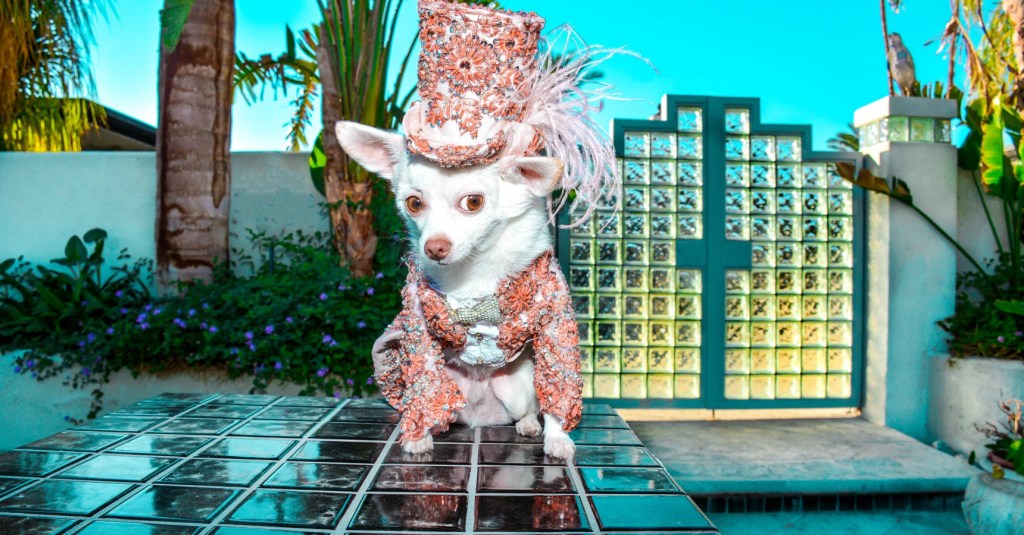
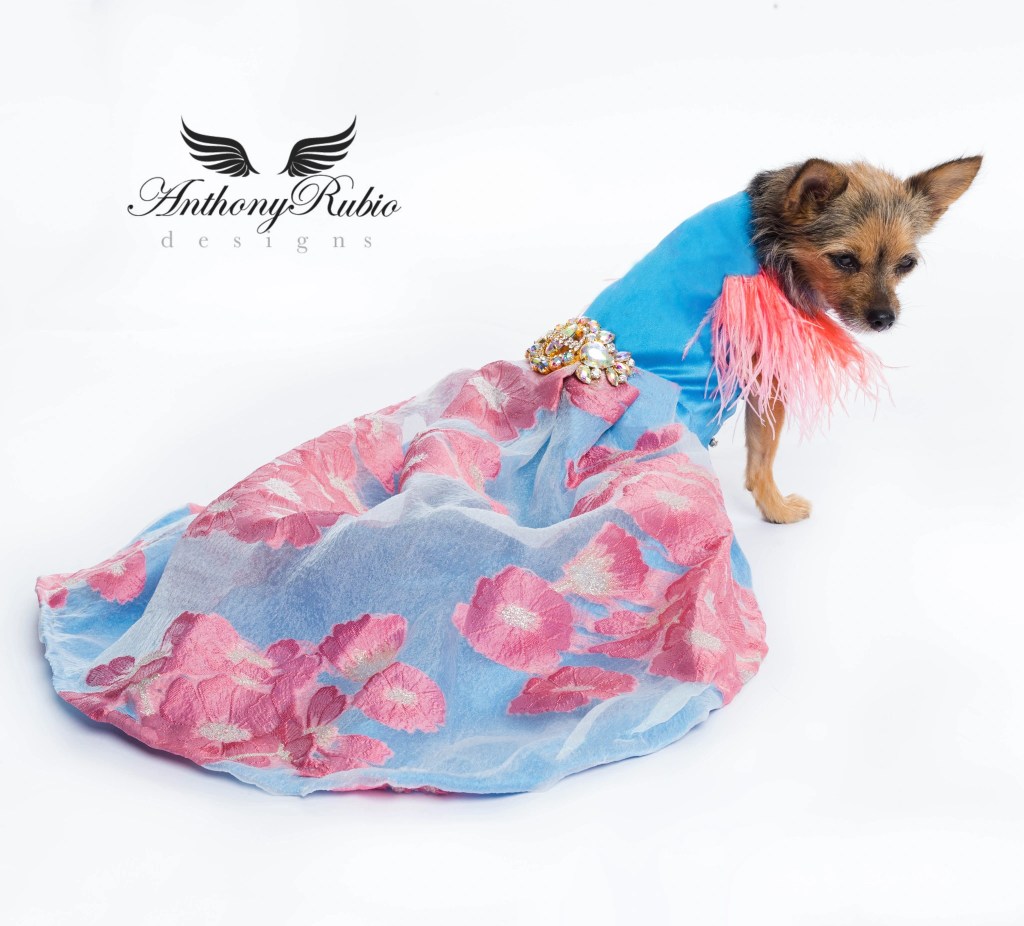
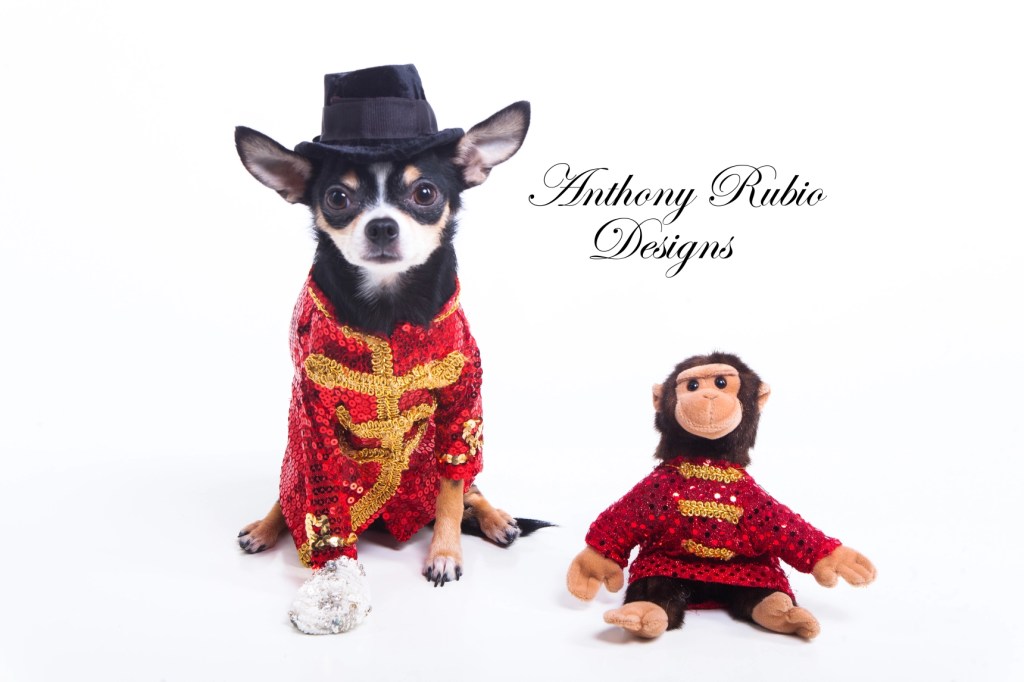
Accessories count items such as umbrellas, bedazzled leashes, shoes (that actually impair the animal’s balance), and virtually any type of toy.
The emotional wellbeing of a pet no longer depends on the sole owner’s accountability, but there are diverse branches of specialization that comprise veterinarians, psychologists, chiropractors, trainers, behavioural coaches, dieticians and groomers.
Many of these specialists exist to mirror the support systems that humans rely on for their on wellbeing: by design, their existence is accepted under the assumption that whatever is good for the human must be good for the pet.
This is undeniably true for some aspects in which neglect of animals needs could severely impact the animals’ quality of life.
If we consider that dogs and cats’ existence, for instance, is so profoundly dependent on humans, it would be unethical to feed these animals with food that has an extremely poor nutritional profile, after having perfected for generations the domestication that now makes it impossible for them to procure their own sustainment in the wild.
On the other hand, endowing animals with an apparatus of accessories without having factual evidence that they need them, has the potential of deteriorating further their ability to adapt to the environment at their own pace.
Some might claim that we wouldn’t be so cruel as to hold the same argument for baby humans, who come defenseless into this world, so why would we apply it to pets, who are equally unarmed?
Most definitely, pet owners who try to bring comfort into the life of their pets through clothing, services, toys and food are not doing so with the intention of enslaving and torturing them -quite the opposite.
The issue at hand here, however, is the fact that the practice of pet keeping, no matter how lovingly led, perpetuates a systemic imposition of human projections onto another species, and it hinders the animals’ right to self-determination.
While baby humans have full control on their self-determination once they grow into adults, the same cannot be said about pets.
Why do some love animals more than humans?
Sadly enough, to this day we do not have records of animals’ autobiographical experiences that are intelligible to us.
Humans and pets have not found a bidirectional system of communication yet, and even the inventions that attempt to bridge the cognitive gaps between humans and pets are biased and expressively limited translations of animal sounds into human languages.
It is a pretentious delusion, for humans to be able to decipher the full complexity of animals thoughts and feelings.
Until that bilateral communication will have been established, it is safe to assume that whichever choice we take on behalf of our animal companions for their own good is at best a projection, if not an imposition.
To add to that, projections should lead us to question whether pet keeping is not, in itself, a form of compensation.
There is a sense of satisfaction stemming from the control we have over these animals’ lives.
In recent years, animal rights activists have started advocating for a correction in our language. Humans should refer to their pets not as objects of ownership, but as non-human persons that they are guardians of.
This language shift would contribute to the liberation of animals -or at least, to the acknowledgement of one’s unfitness for the duties that come with guardianship.
At a closer look, humans who claim to prefer pets to their own species, on the account that the bond between pets and humans is characterized by unconditional love, have the confidence to state so just because there is no dialogue between guardians and pets.
How enigmatic and electrifying it is, to engage in an affective relationship where the other party cannot communicate neither reciprocity nor hostility of feelings. We love animals, because we are wired to favour the vulnerable and the helpless.
Pets have no choice, but to accept our love, or at least live with it, as resistance results in sessions of behavioural correction if not abandonment.
58% of Millennials in 2022 chose to keep a pet over having children; 40% of prospect parents in 2021 welcomed a pet in their household as a preparatory experiment to parenthood. Pet keeping is generally embraced as a more viable option for those who are unsure about starting a family of their own. For others, this is the only type of caring dependency they wish to get into. For many, this is a fallback for failed relationships with humans.
Many pet keepers shower their companion animals with such attention, because their instinctual need to attend to another living creature, and be loved in return, has gone unmet.
Keeping a pet removes the stakes of rejection, as well as those of self reflection. If the animal’s personality is incompatible with that of the keeper, the keeper could have no qualms about deserting the pet or setting it up for adoption. The rate of pets relinquishment reached staggering peaks during the COVID-19 pandemic, following an unprecedented number of adoptions made to fight loneliness and isolation.
Lastly, separation from their similar puts animals in such state of fragility, that they can appear even more eager to be physically close to their keepers, for a sense of relief.
PETA argues that separation from their similars is the utmost act of violence that is regularly perpetrated on pets. The lack of exposure to peers who understand each other’s behaviour and norms not only is the source of excruciating loneliness, but it also gives animals no other choice but to confide in humans for their own survival.
Humans push onto pets their parental instincts, and reduce them to dolls without will, to the point where animals don’t even have agency over their reproductive rights. According to Troy Vettese, environmental historian at the European University Institute and co-author of Half-Earth Socialism (Verso 2020), most pets kept in human habitats live a life of unimaginable solitude, premature mortality, plaguing diseases and damages to their surrounding ecosystems.
Mothers of several species are kept perpetually pregnant and separated from their cubs, all while keeping alive the exploitative trade of puppies that satisfies someone else’s desire for parenthood.
PETA’s position, like that of many ethologists, is that current pet keepers should span and neuter their pets, to put an end to pet keeping as soon as possible.
How will humans and pets live together in the future?
The future of pets and humans relationships could then become that of a peaceful, but separated and not codependent coexistence.
Treated similarly to wild fauna, species currently kept as pets could have their agency restored; their habitat would be safeguarded, at the risk of witnessing of a dreadful rebirth of these species as feral and unpredictable.
Until that future is forthcoming, releasing pets into the wild would currently equate to a cruel act of abandonment of animals that are not fit for homelessness.
Hence, a possibility for ethical guardianship for the prospect adopter is one that doesn’t look at the advantages that come to the human, but to the acts of compassion towards the animal. The ethical guardian takes care of the existing and unhoused population providing food, shelter, companionship and protection.
Expressed in concrete action points, this could correspond to:
- prioritizing adoption of animals living in shelters
- criminalizing, and shutting down, operational puppy mills
- wherever possible, adopting more than one animal of the same species at the same time
- spanning and neutering the existing population, to mitigate the uncontrolled increase of homeless animals
- ensuring that animals have access to safe shelter, nutritious food, clean water and living environments suited to their genetic predisposition, where they can explore outdoor areas in autonomy.
What would become of the cultural practice of pet keeping? Would our societies be affected by the gradual disappearing of companionship animals? Probably, not as much as we’d like to assume.
In the same exact way that they’ve been able to grow fond of creatures that were once used for work, humans will redirect their affection to new idols.
Be these machines, holograms, plants or digital identities altogether, humans have sufficient adaptability and aptitude to love, to find new objects of devotion past the trap of imprisonment. And if they don’t, this will be proof to how the affection towards pets is flawed in the first place.
The path to animal liberation is paved with suffering and painful separations. We have to be at peace with the fundamental truth that for pets, a future without us will at times look chaotic, if not antagonistic. We can’t expect liberation without factoring rebellion among the plausible scenarios.
We have to prepare ourselves to the turning of the tide starting now. Are we willing to support the run towards autonomy for those who we oppressed, on the basis of how much we claim to love them? Are we ready to step back from a distorted relationship, in which we need the other party much more than they need us?
The final decision will be a testament to our love for animals, as opposed to the love we have for ourselves.
Resources
- Peta’s FAQ on Companion Animals
- APPA, Pet Industry Market Size, Trends & Ownership Statistics, 2023
- Alicia Ault, Ask Smithsonian: When Did People Start Keeping Pets?, Smithsonian Magazine, September 28, 2016
- Monika Baár, From Working Animals to Cherished Pets: Canine Histories across the Centuries, Historisch Tijdschrift Groniek, 206-207, Dier & Mens, pp. 48-59
- Mona Chalabi, The canine couture show where ‘humans are the accessories’, The Guardian, September 12th, 2017
- Jacques Derrida, The Animal That Therefore I am (More To Follow), Fordham University Press, 2008
- Jules Howard, Do our pets really love us -or do they just stick around for the food?, The Guardian, July 16th, 2019
- Britannica, The Editors of Encyclopaedia. “domestication“. Encyclopedia Britannica, May 18th, 2023. Accessed June 2nd, 2023
- Britannica, The Editors of Encyclopaedia, “pet“, Encyclopedia Britannica, April 27th, 2023. Accessed June 2nd, 2023
- Health for Animals, Global State of Pet Care. Stats, Facts and Trends, September 2022
- Troy Vettese, Want to truly have empathy for animals? Stop owning pets, The Guardian, February 4th 2023
- Matthew Wills, The Invention of Pets, Jstor Daily, January 28, 2017
 Eva Casini